Earth Analogue: first seedlings
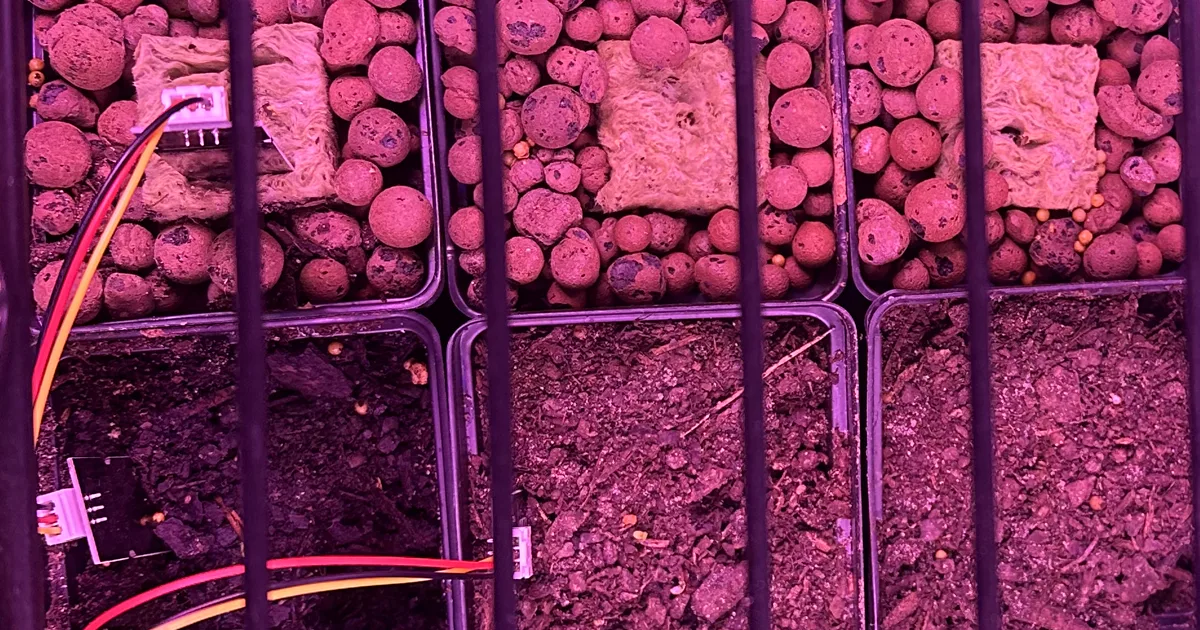
The first seedlings in the Earth Analogue bench are up, four days after sowing, in both of the media we planted. The light, the medium, the drainage and the cameras all held against a live crop instead of a checklist — and the pilot has already handed us its first finding, which is exactly what we built it for.
What we planted
On August 9 we mixed both media in four-litre batches and filled eighteen pots: nine in soil, nine in expanded clay, rockwool starters, at least two seeds each, 30 grams of Osmocote per batch — the same 7.5 grams per litre the runbook fixes for the baseline. Two arms, one variable, so we get a substrate comparison before we commit the real run to either of them.
They came up through a dry first day and a hot tent. One of our nodes logged 27 to 33 °C across the twenty-four hours around sowing, well above the 23 °C the ISS lettuce work runs at, and the seedlings arrived on schedule regardless. Cooling is on the list, and it is on the list as a number rather than an impression because the tent has been instrumented since before there was anything alive in it.
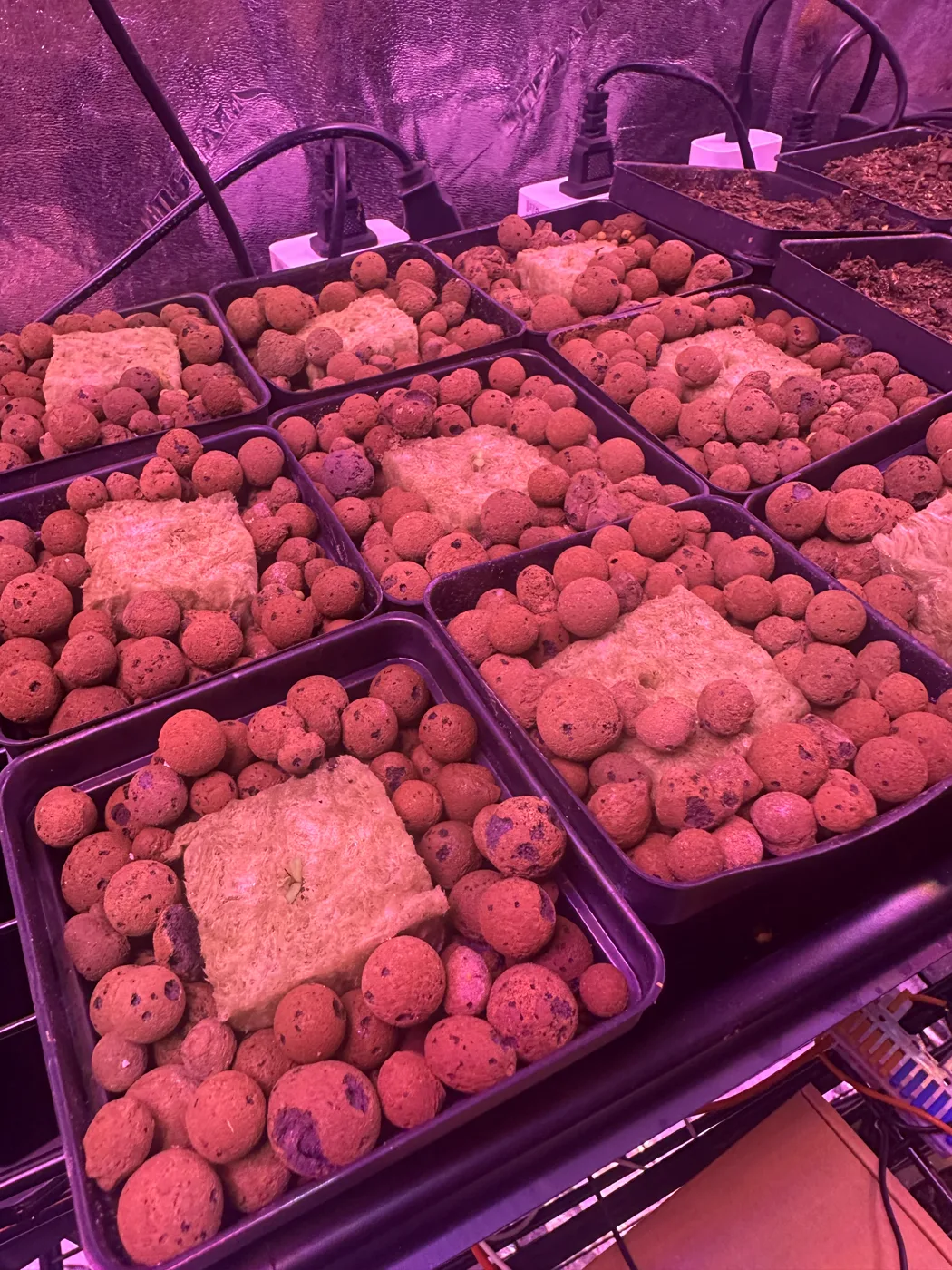
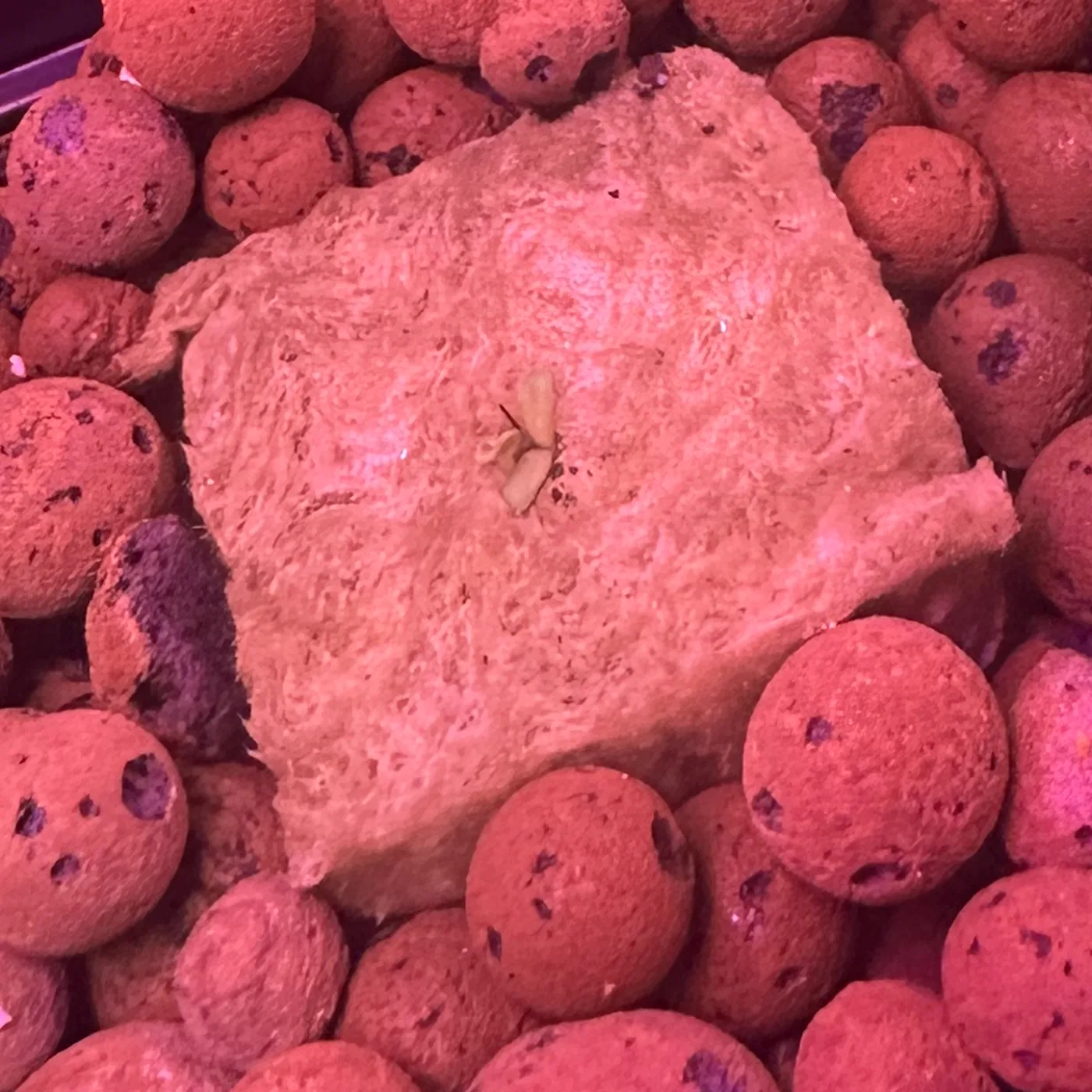
In the clay pots the seedlings come up out of the rockwool cubes set into the pebbles, cotyledons open and the hypocotyl still short.
The first finding: the light has to come up
The soil arm is the interesting one.
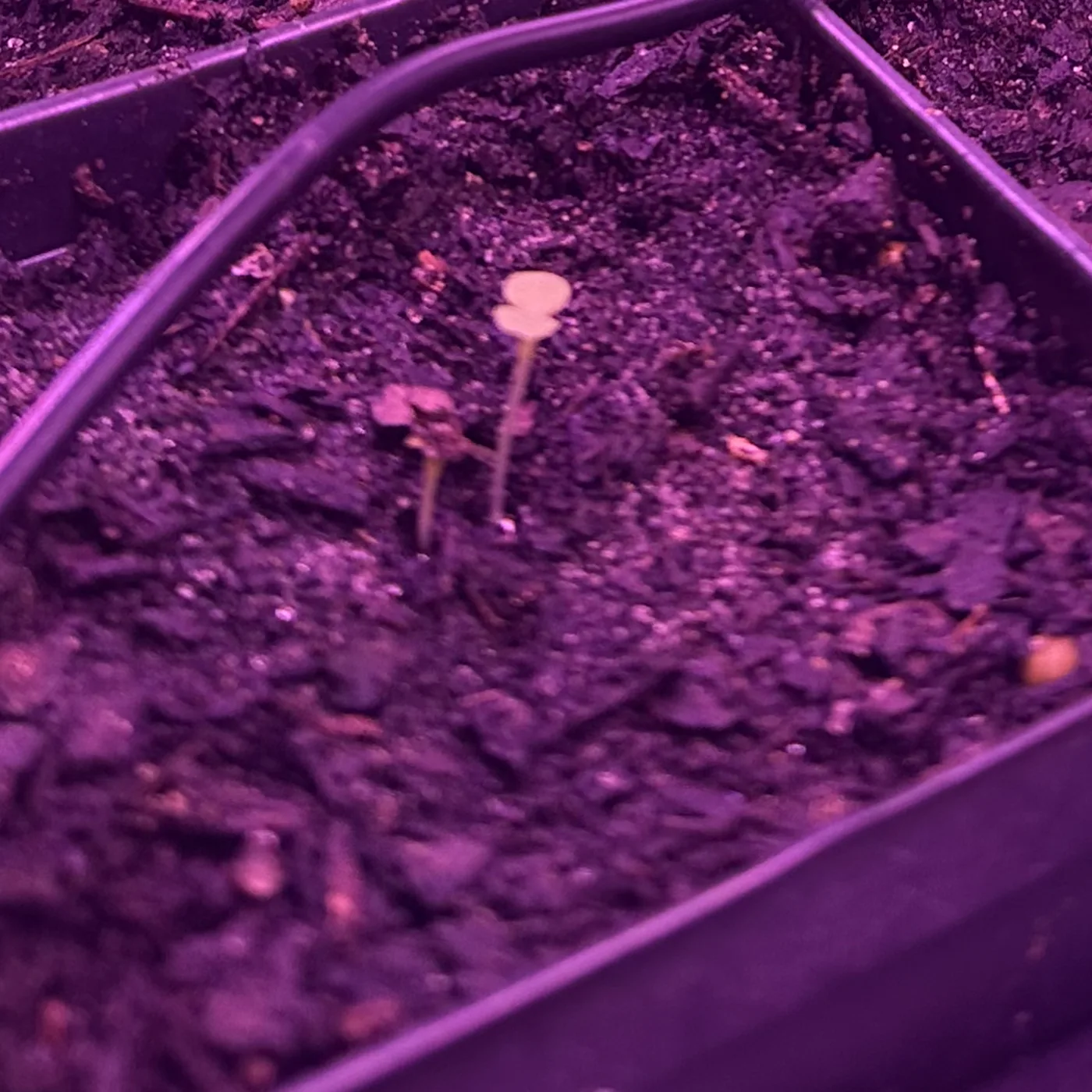
That seedling has thrown a long, pale hypocotyl carrying cotyledons barely wider than the stem holding them up. It is etiolated — reaching for light that is not arriving. We flagged a light shortfall in the post that opened this experiment, from a sensor nobody had calibrated yet, and four days of plants have now confirmed it faster and more cheaply than the instrument could.
That is the pilot doing precisely its job. Raising delivered light into the declared band was already the first item on the list. Now it has a photograph attached to it, and we get to fix it while a tray of lettuce is the only thing at stake.
What the pilot locks down for the baseline
The baseline is one configuration, frozen before a seed goes in and untouched until harvest. The pilot is what tells us exactly what to write on that page:
Seed. Lactuca sativa cv. Outredgeous, the cultivar the ISS lettuce paper fixes, sourced by name with its lot recorded. The pilot ran on a generic red-romaine packet — the right seed for a dress rehearsal, and the wrong one for a published number.
Container. Veggie-style plant pillows, the configuration a pod would actually carry. The pilot used square pots.
Fertilizer. Nutricote 18-6-8 at the rate the pilot already hit, with label, release duration and lot written down.
Light. PPFD from a calibrated sensor, delivered into a band declared in advance.
Temperature. A declared band, and the cooling to hold it.
Five settings, known precisely four days after sowing rather than argued about after harvest. That is the whole return on running a pilot first.
What happens next
Calibrate the light sensor, raise delivered light into the band, meter every load on its own plug, and freeze the protocol. Then sow Outredgeous, run it to harvest, and set the result beside Wheeler’s 2008 Biomass Production Chamber figure of 0.42 grams of edible dry mass per mole — an external benchmark, with the differences named: he grew Waldmann’s Green, hydroponically, under different CO₂ and different lamps.
These sprouts get pulled before then. They were the rehearsal, and they told us what we needed to know while it was still cheap to hear.